
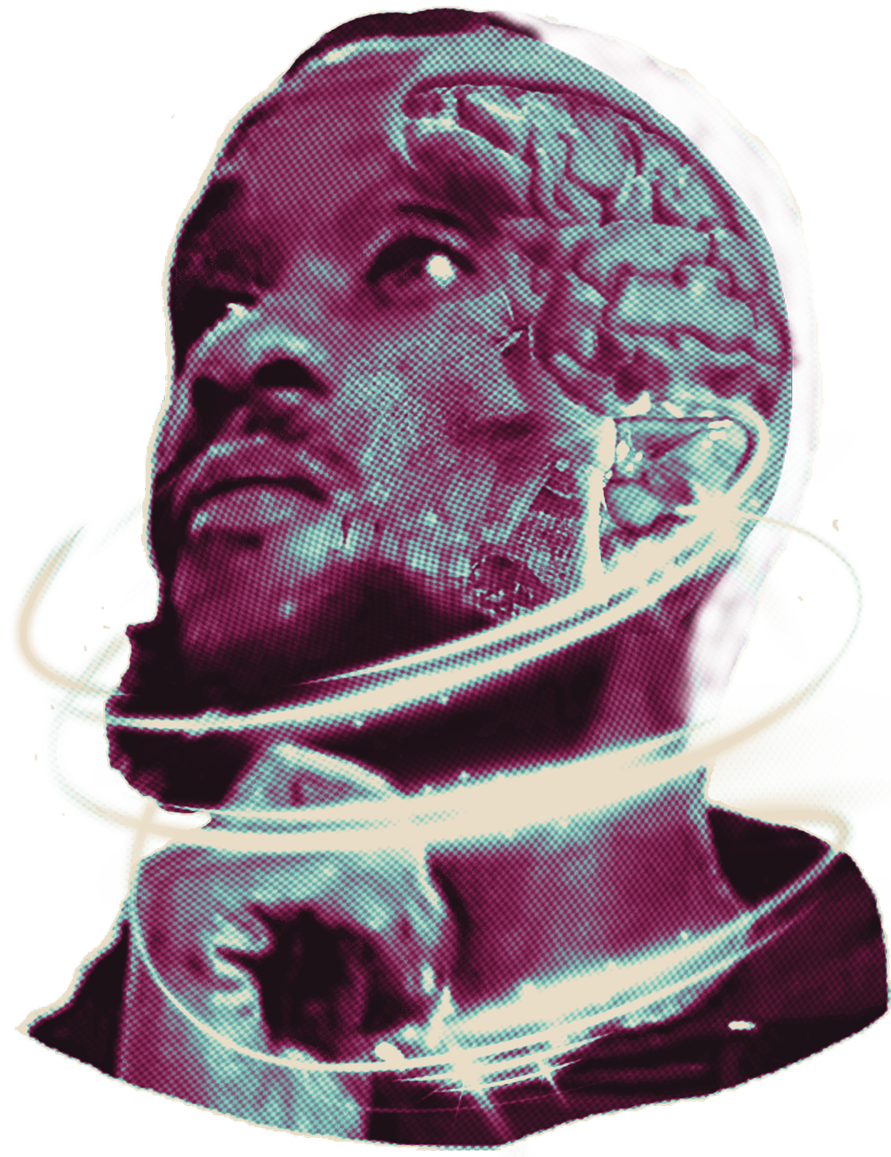

Hi
My name is Deron Carey
Welcome to
Tap Into Ataxia

I’m from Southwest Philadelphia and I call myself The Ataxia Slayer!
Because I’m slaying Ataxia! Yea!

I am diagnosed with Spinocerebellar Ataxia type 7
It’s a rare neurological disorder that has no cure.  It’s a mutated gene that causes progressive problems in your cerebellum with balance and coordination, eyesight, and speech. To most people, I appear to be drunk.
I inherited the gene from my grandfather Thomas Barksdale who also struggled with Ataxia type 7 later in his life and had no common knowledge of it.

I’m here to spread the word about Ataxia!!

Starting out

The gene is kinda selective so only my Mother Felicia Barksdale inherited the mutated gene out of the 4 kids she had. 

My mother wasn’t aware of this rare disease either so she lived her normal life.

When she was 23 yrs on March 28, 1992,  A king was born!! 

8 years passed and then my Mom gave birth to my sister Daijah Freeman on April 5, 2000. 

After a while my mom wanted a change from the neighborhood so we moved out of Philly for a little bit.

I graduated from Upper Darby High School in 2010 then a couple of years after that we moved back to West Philly, where we resided to after growing up in Southwest Philly.

Life Before

When I was 22 my first son was born. Dahron Carey Jr. on Jan 28, 2015. 

My friends noticed a slight difference in me
but no one could put their finger on it neither could I.

So that’s when I started to slay Ataxia.

My symptoms got more noticeable but I was fighting it so bad
even though I didn’t know what was wrong with me. 

I just knew I wasn’t going to let this weird stuff that was happening to me,
stop me from living my life. I had jobs, I went out, I drove everywhere,
and did everything while struggling with Ataxia. 

Nobody knew what it was, and you’ve never seen anything like this.

But at least I got to show my first son Dahron Jr, what a good life was before my symptoms started to get noticeable.

I could throw him up in the air and catch him, I used to run down the street with him, sitting on my shoulder. We did everything together.

The Change

When my son turned 2 that’s when it started to get weird. 
I couldn’t run around with him anymore. I was enjoying being a Dad,
but as the symptoms started to worsen, I couldn’t do the stuff that I wanted to do with him anymore.

But me being the good Father that I am I wasn’t going to let this alter his happy life.
So that’s when I really started fighting it.  And you could actually notice a difference in me.

I was getting some of the worst accusations from people, it was burning me out so I just started to agree with people, I understood that people were just too ignorant of what was going on.

I didn’t have any knowledge of this either, I was just living a normal life and when I was 23 my mom said she saw signs of me having some of the same symptoms that she was having.

At the time she has already been diagnosed but she didn’t make it known to us because she didn’t want to frighten anybody. 
When the symptoms started to get more progressive, she started seeking help from us, and my symptoms started to show more also.
She sent me to meet the neurologist she visits and shortly after going to appointments, they wanted to study me. 

A couple of visits went by and the doctors wanted me to get an MRI to study my brain activity. They saw dysfunction in my cerebellum.
So they knew I had Ataxia but now they wanted to look even deeper to figure out what type of Ataxia it was because this one was different.  So now I get scheduled for a genetic test, and now they want blood! So I give a million blood samples and then they finally came to the conclusion that I have the same Ataxia type 7 as my mom. We were diagnosed by Penn Neurology.

Unimaginable

On Oct 3, 2018, our second son was born. His name is Niam Carey.
When he was born my symptoms weren’t too bad, well they were bad but I’m a soldier so I was fighting this disease with everything I had and I still am! 

During Niam’s early life, we played around and did everything.

I made sure he lived his best life. I am a family man too so I made sure the whole household was good! 

But then reality started to hit me and I knew I wouldn’t be able to do it for long
but I wasn’t giving up.  I could still drive then, so we went places and did stuff like a regular family is supposed to do. I wasn’t going to let this disease stop me from doing the things I had to do as a man. I made the family so now I have to take care of it.

My son was 3 months when the doctors said he was at risk of having Ataxia type 7. After taking him to all these appointments when he was 7 months. 

He was diagnosed with Spinocerebellar Ataxia type 7. We took him in for an annual doctor appointment, then they said that he was having trouble swallowing.  So then they want him to stay in their care because his symptoms were going to progress. 

Now for some reason, his symptoms progressed really fast over the months. And he never got released from the hospital.  Could this be a case of pediatric Ataxia?  Procedure after procedure nothing gets better, it seemed like everything was getting worse. 

Oh, I didn’t know that Ataxia type 7 was fatal. 

Some time goes by and Niam celebrates his first Birthday in the hospital. Things get even worse though.

The doctor says that his heart is the problem. And he’s confined to the ICU. 

Not a good place to be. He was in the intensive care unit for about 3 weeks. 

About a month after his birthday.  On Nov 28, 2019. On Thanksgiving morning he passes…

Everyone was devastated. I was a wreck, they couldn’t tell us why Ataxia affected him so fast, why there was no hope. 

Have you ever watched your child stop breathing and it’s nothing you can do about it? 

I went crazy. I’m gonna put an end to Ataxia! I’m 30 now and this disease really changed my life and the people who love me.

The Ataxia Slayer

Somehow the people of America and all over the world have no common knowledge of this life-threatening disease. 

Well, guess what? I’m here today so you can see… 

See with your own eyes and hear with your own ears, the struggle of my life. 

Hopefully, this will shine a new light on this horrible disease that has taken the life of my son Niam and has tragically affected my own.
 

I am the Ataxia Slayer

Understanding Ataxia Type 7 (SCA7)

Spinocerebellar Ataxia Type 7 (SCA7) is a rare inherited neurological disease that affects coordination, balance, speech, and vision. This page explains the condition in simple terms for individuals, families, caregivers, and anyone seeking to understand more about the disease.

SCA7 is part of a larger group of disorders known as spinocerebellar ataxias, which affect how the brain controls movement.

Quick Overview of SCA7

What it is

A rare inherited neurological disease that affects coordination and vision.

What it affects

The brain areas responsible for balance, movement, speech, and the retina in the eyes.

Progressions

Symptoms typically develop gradually and worsen over time.

Who it impacts

Individuals and families who carry a specific genetic mutation.

What Is Ataxia Type 7?

Learn More

Spinocerebellar Ataxia Type 7 is a progressive neurological condition that affects the cerebellum, the part of the brain responsible for coordination and balance.

As the disease progresses, nerve cells in the brain and retina become damaged. This can lead to problems with walking, coordination, speech, and vision.

One feature that makes SCA7 different from many other ataxias is that it often causes progressive vision loss due to retinal degeneration.

Over time, symptoms can become more noticeable and may affect daily activities.

Reference:
National Organization for Rare Disorders
https://rarediseases.org/rare-diseases/spinocerebellar-ataxia-type-7/

What Causes SCA7?

Learn More

SCA7 is caused by a change in a gene known as ATXN7. This gene normally helps produce a protein involved in normal cell function.

In people with SCA7, the gene contains an expanded sequence of DNA that leads to the production of an abnormal protein. Over time, this abnormal protein can damage certain nerve cells in the brain and retina.

Key points

  • The cerebellum becomes affected, impacting coordination and balance
  • The retina becomes damaged, leading to vision problems
  • Symptoms worsen as nerve cells gradually deteriorate

Reference:
MedlinePlus Genetics
https://medlineplus.gov/genetics/condition/spinocerebellar-ataxia-type-7/

How Is SCA7 Inherited?

Learn More

SCA7 is passed down through families in what is called an autosomal dominant inheritance pattern.

This means that a person only needs one copy of the altered gene to develop the disease.

If one parent carries the gene mutation, each child has a 50% chance of inheriting it.

Another important feature of SCA7 is something called genetic anticipation. This means that the disease may appear earlier or progress more quickly in the next generation.

Important points

  • Only one copy of the gene mutation is needed
  • Each child of an affected parent has a 50% chance of inheriting it
  • Symptoms may appear earlier in future generations

Reference:
National Human Genome Research Institute
https://www.genome.gov/genetics-glossary/Autosomal-Dominant

Common Symptoms of SCA7

Learn More

Movement and Coordination

  • Difficulty with balance
  • Unsteady walking
  • Poor coordination of hands and arms
  • Trouble with fine motor skills
  • Slurred or slowed speech

Vision Changes

  • Blurred vision
  • Difficulty focusing
  • Loss of central vision
  • Progressive retinal degeneration
  • Difficulty seeing in low light

Symptoms may appear gradually and vary from person to person.

Reference:
National Ataxia Foundation
https://www.ataxia.org/sca7/

How Is SCA7 Diagnosed?

Learn More

Doctors may use several tools to diagnose SCA7.

Diagnosis usually begins with a neurological evaluation and review of family history.

Common diagnostic methods

  • Neurological examination
  • Eye examination to detect retinal degeneration
  • MRI scans of the brain
  • Genetic testing to confirm the ATXN7 mutation

Genetic testing is currently the most reliable way to confirm SCA7.

Reference:
MedlinePlus Genetics
https://medlineplus.gov/genetics/condition/spinocerebellar-ataxia-type-7/

Treatment and Symptom Management

Learn More

There is currently no cure for SCA7, but supportive therapies can help manage symptoms and improve quality of life.

Treatment plans often focus on maintaining independence and addressing specific symptoms.

Supportive care may include

  • Physical therapy to improve balance and strength
  • Occupational therapy for daily activities
  • Speech therapy for communication difficulties
  • Vision support and assistive technologies
  • Mobility aids such as walkers or wheelchairs

Researchers continue to study new treatments and potential gene therapies for spinocerebellar ataxias.

Reference:
National Ataxia Foundation Research
https://www.ataxia.org/research/

Living With SCA7

Learn More

Living with SCA7 can bring physical, emotional, and practical challenges for individuals and their families. Education, medical support, and strong community networks can help people adapt to these changes and maintain quality of life.

Support groups, advocacy organizations, and research foundations provide resources for patients, caregivers, and families navigating life with the condition.

Connecting with others who share similar experiences can also be an important source of encouragement and support.

Resources

For more information about SCA7 and ongoing research, the following organizations provide trusted educational resources:

These organizations provide information about research, treatment developments, and support networks for individuals living with ataxia.

My Life and Events

Coming Soon